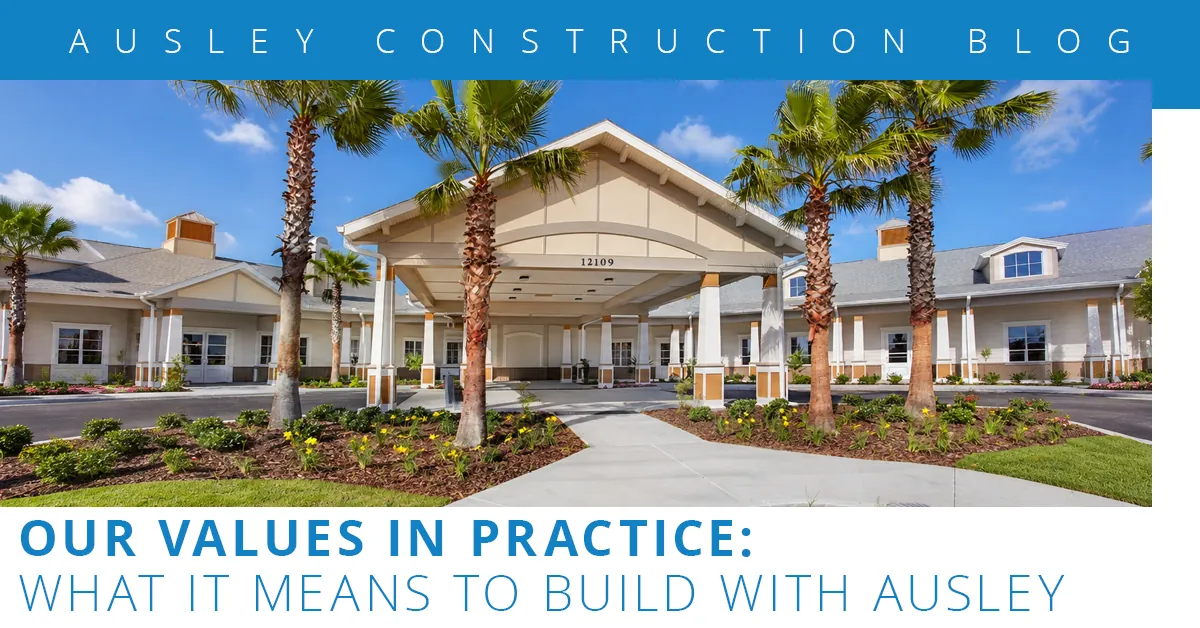
From the first planning meeting to the final walkthrough, Ausley Construction’s values shape how we approach projects, serve our clients, and build for the long term.
A successful construction project is measured by the quality of the finished facility, the planning behind it, the reliability of the team delivering it, and the value it provides to the people who use it.
At Ausley Construction, our values guide how we work at every stage of a project. They shape how we prepare, communicate, solve problems, and collaborate with clients and partners.
These principles have guided our company since its founding and continue to inform how we serve clients across the Southeast and Mid-Atlantic.
Strong project outcomes start with a clear plan. Early planning establishes a shared understanding of the owner’s goals, budget, schedule, and operational requirements.
During preconstruction, the team evaluates project details, considers constructability, coordinates with key partners, and identifies potential challenges.
This preparation supports realistic expectations, informed decisions, and a more coordinated path into construction.
Reliability comes from following through on commitments, communicating clearly, and managing the details that keep a project moving. Our teams focus on schedule coordination, consistent project management, and timely responses when conditions change.
By keeping owners informed and taking responsibility for the work, we help maintain alignment around project goals and give clients a dependable partner throughout the process.
A facility represents a significant investment, and its value depends on how well it serves people over time. Careful coordination, quality execution, and attention to the owner’s needs help create spaces that are practical, durable, and fit for their intended use.
Schools, healthcare facilities, manufacturing spaces, and municipal buildings each support essential activities in their communities. Our work is guided by the goal of delivering facilities that continue to serve those needs after construction is complete.
Construction experience brings perspective to complex decisions. It helps teams recognize potential issues, understand how building systems and trades intersect, and evaluate options with the project’s goals in mind.
Experience is most effective when paired with accountability. Our teams communicate openly, take ownership of their responsibilities, and work collaboratively with owners, architects, engineers, subcontractors, and project partners. The result is a considered approach supported by responsible execution.
The facilities we build help shape the communities around them. Schools support learning, healthcare facilities serve patients and families, and manufacturing and distribution spaces support businesses and local economies. The impact of construction extends to the people who learn, work, receive care, and gather in these places.
Ausley’s community involvement reflects our commitment to being a responsible partner and understanding the people and institutions behind each project. As we serve communities across multiple regions, local needs remain an important part of how we approach our work.
Values matter when they shape everyday decisions. At Ausley Construction, our principles guide how we plan, communicate, coordinate, and deliver projects. They inform the decisions we make throughout construction and keep the focus on creating facilities that serve their intended purpose.
As the year draws to a close, we’re grateful to the clients, architects, engineers, subcontractors, and community partners who have contributed to our projects. Successful construction depends on collaboration, trust, and a shared commitment to quality. These relationships are central to our approach to construction management and the projects we deliver across the Southeast and Mid-Atlantic. We look forward to continuing this work together in the year ahead.
Our values aren’t separate from the work. They’re reflected in how we do it, every day.
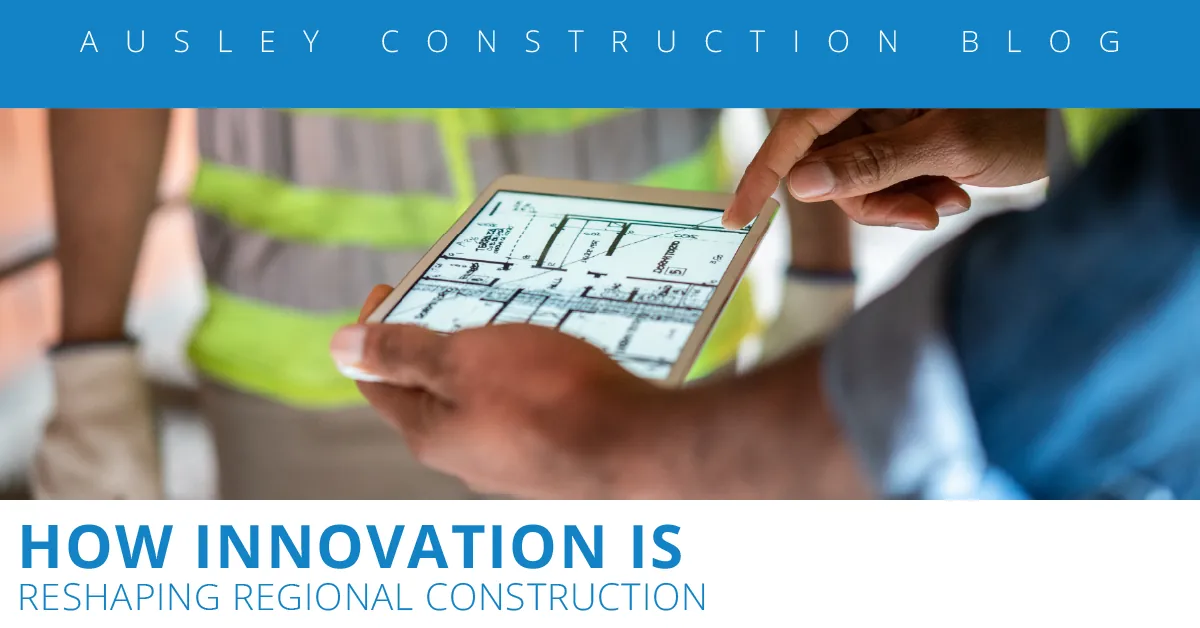
From preconstruction and project management to communication and field operations, new technologies are helping construction teams work smarter, improve coordination, and deliver better outcomes across increasingly complex projects.
Construction has always been an industry built on experience, relationships, and careful planning. Today, technology is adding new tools to that foundation. As construction projects become more complex and firms expand across multiple markets, technology is helping project teams access better information, communicate more efficiently, and make decisions earlier in the process.
For regional construction firms like Ausley Construction, innovation isn't about replacing the experience that has guided the company for decades. For us, it’s about using technology to strengthen that experience and give project teams better tools to plan, coordinate, and deliver successful projects.
Some of the most important decisions on a construction project happen before construction begins. Technology is helping construction teams evaluate projects earlier and with greater visibility. Digital plans, estimating platforms, building information modeling (BIM), and project management systems can give owners, architects, and contractors a more complete understanding of a project before work begins.
This can help our teams:
The value isn't simply having more technology but rather having better information at the point when decisions can still be made. When potential challenges are identified during preconstruction, the project team has more opportunities to address them before they affect the schedule, budget, or construction process.
Construction involves a large network of people, companies, and disciplines working toward the same goal. Owners, architects, engineers, subcontractors, suppliers, and project managers all need access to accurate information. As projects grow more complex, keeping everyone aligned becomes increasingly important.
Digital project management platforms can centralize drawings, schedules, documentation, communications, and other project information. Instead of relying on disconnected systems or information that may be difficult to access, teams can work from a shared source of information.
For regional construction firms, this connectivity becomes even more valuable. Our teams may be working across different offices, markets, and jobsites, but project information needs to remain accessible and consistent. Technology helps create that connection while allowing local teams to remain responsive to the specific needs of each project.
Today's construction teams have access to mobile tools that allow project information to move more easily between the office and the field. Digital documentation, mobile reporting, electronic drawings, scheduling tools, and other field technologies can give project teams better visibility into what's happening on the jobsite.
This can improve communication around:
The result is a more connected project team, with information moving quickly between the people responsible for planning and those responsible for execution.
One of the biggest opportunities created by construction technology is the ability to turn project information into better decisions. Project teams can use data to track schedules, monitor costs, identify trends, and evaluate potential impacts before they become larger issues.
This doesn't eliminate uncertainty from construction. Every project has variables that can't be fully predicted. Instead, better information can help teams recognize those variables sooner and respond more effectively.
For owners, that can mean greater visibility into how a project is progressing. For construction teams, it can mean more opportunities to identify potential challenges and develop solutions before they affect the project.
Artificial intelligence is also beginning to influence how construction teams approach planning and project management. AI tools can assist with tasks such as analyzing project information, identifying patterns, supporting scheduling, organizing documentation, and helping teams evaluate large amounts of data.
The potential is significant, but technology still needs context.
Construction projects involve physical environments, changing conditions, multiple stakeholders, and decisions that require experience and judgment. AI can help teams process information, but experienced construction professionals remain responsible for understanding what that information means and determining how to act on it.
The future of construction isn't technology replacing experience. It's technology giving experienced teams better information to work with.
Technology can make information more accessible, improve communication, and help teams identify potential challenges earlier, but successful construction still depends on experience, judgment, and people.
At Ausley Construction, we see technology as a tool that strengthens decades of construction knowledge, helping today's teams plan more effectively, communicate more clearly, anticipate challenges, and manage increasingly complex projects.
Innovation isn't about adopting technology simply because it's new; it's about finding better ways to solve problems, improve coordination, and deliver value to clients. As technology continues to evolve, we're continuing to look for ways to bring innovation and experience together to build smarter and deliver better outcomes for our clients.